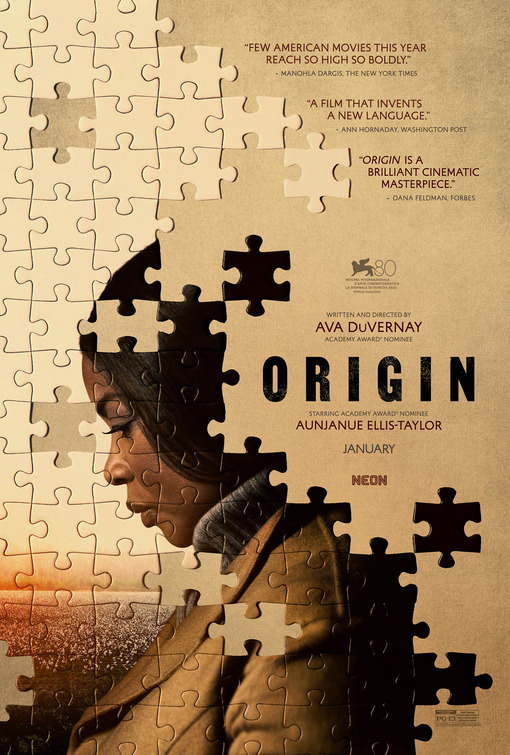
As a film writer, I believe my job isn’t to tell you what you should watch. I believe my role is to present context for a film. I’m here to lay the groundwork for a deeper understanding of the material and hopefully, provide new ways to appreciate the work. I don’t just watch a film; sometimes I’m inspired to do some research too. I may read interviews. I may have been present for a question-and-answer session. I find articles about those involved in the project. I think about how this film fits in the context of other work by the director. If I have time, I try to read the book the film is based on.
Caste, the Origins of Our Discontents (2020) was written by Isabel Wilkerson, the Pulitzer Prize-winning author of The Warmth of Other Suns (2010). Wilkerson’s first novel explores the migration out of the American South of those fleeing the Jim Crow laws. As she wrote that book, Wilkerson realized that racism was a relatively new construct, invented to categorize and label people by their appearance, making it easier to subjugate slaves and other brown-skinned people. There was a social constraint with a long history that overshadows this concept of racism. “Caste” is the better explanation for this rigid entrenched hierarchy system.
Ava DuVernay found the 400-plus page deeply researched academic book profound. Her screenplay takes examples of racism as an act of hate and caste as a systemic form of societal control and brings those ideas to life. Brief examples from the book become fully realized character studies to illustrate those complex issues. She’s able to transform the academic treatise into a moving, sweeping saga.
Ava DuVernay is an award-winning filmmaker running her own independent distribution company, ARRAY. She adapted Caste, which spent 58 weeks on The Times nonfiction best sellers list. It sold over half a million copies in 2020 (Publishers Weekly). A book still so popular that I’m 32nd on the waitlist at my local library. She wrote, directed and produced the film. Yet, she knew the subject matter would be a tough sell to studios, plus, she wanted to see her vision come to life without those studio constraints.
DuVernay raised the funds much like documentary films often do–by turning to non-profits and philanthropic donations. Sadly, this funding wasn’t enough to boost an Oscar campaign to help her win nominations. Neon is distributing the film in the US but the film was only released for a few days for Oscar-qualification and had no time to build grassroots support. Hopefully, now that it has a larger theatrical run, word of mouth will build an audience for the film and there’ll be other awards and kudos to celebrate this remarkable work.
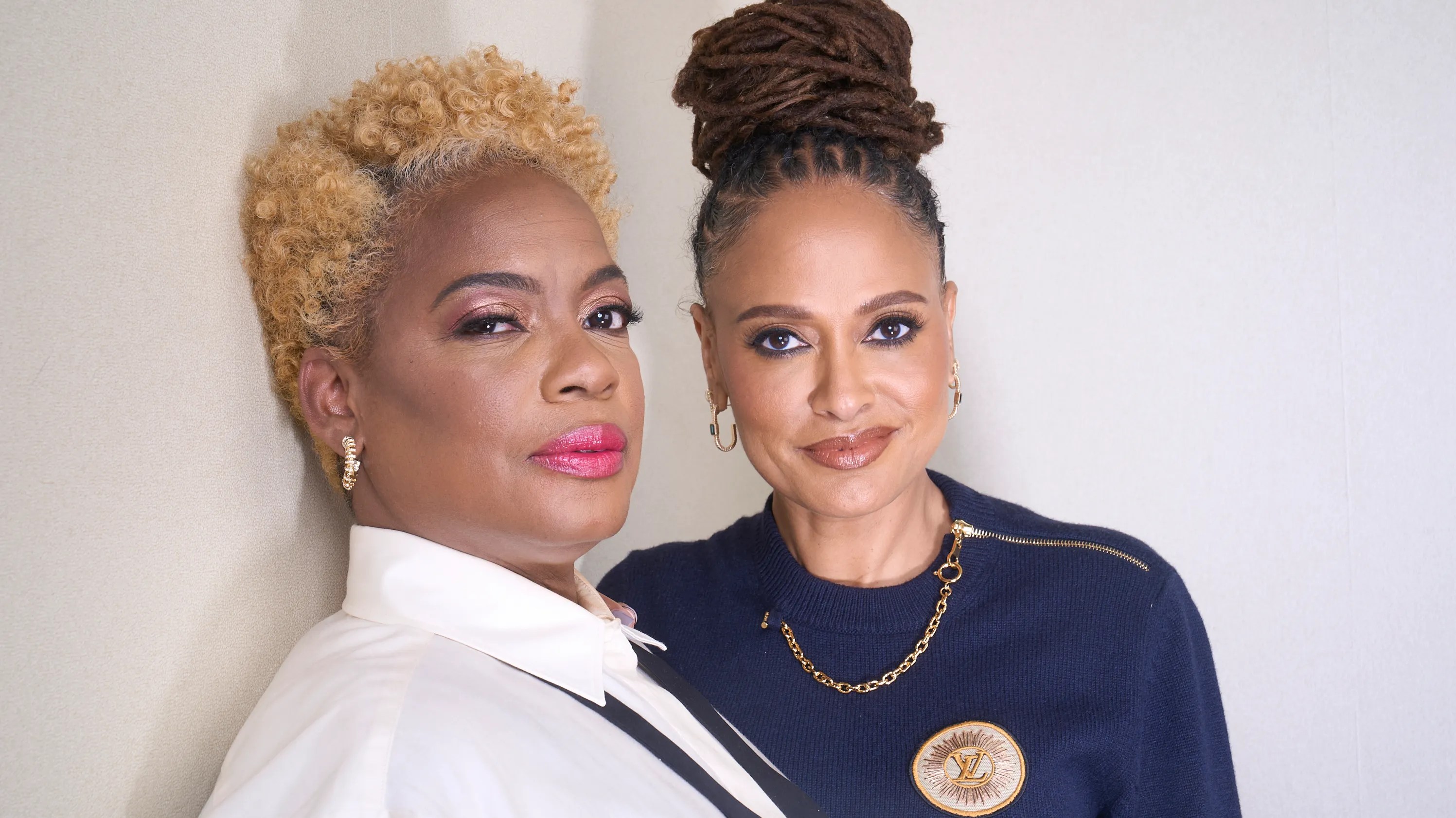
On September 6, 2023, DuVernay, who’s won awards for her previous films “Selma” and “13th”, presented “Origin” at the 80th International Venice Film Festival. Venice is one of the oldest and most prestigious film festivals in the world. DuVernay made history as the first Black female director to have a film in competition in the history of the festival. Her film received a standing, cheering ovation from the audience, according to The Hollywood Reporter, Patrick Brzeski, Alex Ritman, Sept 6, 2023
DuVernay envisioned a way into this material that’s right in the title, “Origin”. She centers author Isabel Wilkerson as the main character. The audience is present for the “origin” of the book–as the journalist has her first intuition, the idea that begins her journey. We follow her as she researches caste. The film moves from modern day India to the segregated American South, to Germany before the Holocaust. “Origin” brings to life the research that draws a line from slave ship to Warsaw ghetto to the wretched treatment of the Dalits in India.
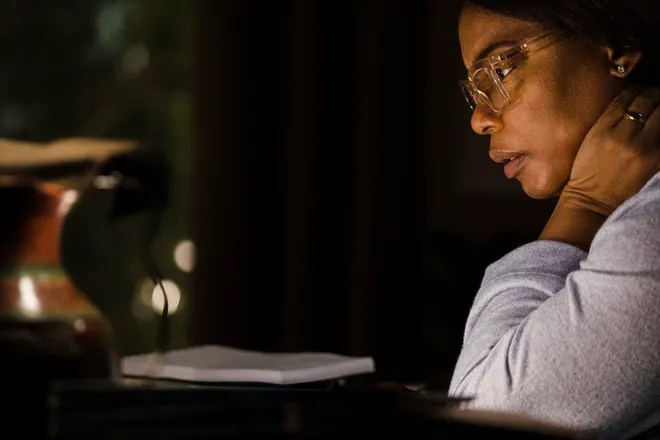
Aunjanue Ellis-Taylor, nominated for an Oscar for her work in “King Richard” portraying Serena and Venus William’s mother, is warm, intelligent and an emotional well spring in the lead role. Watching her grapple with conflicting ideas and failing to communicate those big concepts to her family makes her character all the more human. The way grief is portrayed as a great stillness–laying down in falling leaves till you’re buried, is lovely. Sadly, that grief keeps rippling through the narrative and it’s a marvel that Wilkerson was able to carry on with her work.
The book ends with these words: “A world without caste would set everyone free.” In the film, Ellis-Taylor as Wilkerson types those words and closes her laptop. She’s completed the manuscript and the renovation of her old house. She’s ready to move on. The house symbolizes the work we must do to heal our inherited trauma and biases. It’s a hopeful ending to a story that has such a challenging subject.
“Origin” is rated PG-13 and runs 2 hours and 15 minutes. It contains haunting images of abuse, lynching and bodily contact with human feces (fake feces, but still…) It’s not a film you’ll soon forget and it’s worth the emotional discomfort. There’s a beautiful, emotional song over the credits at the end. New Zealand musician Stan Walker’s song, “I Am” is sung in English and Māori.
Here’s a quote I loved from the author herself:
My hope is that we can see that these false walls of division were erected generations ago, centuries ago, and that none of us had anything to do with the building of these barriers between us. My hope is that through open-hearted understanding, through seeking to engage with the history, by a willingness to really look at our country—which I describe as an old house that needs constant work and reassessment and often repairs—that we seek to set right and transcend the divisions that were erected so long ago, to illuminate the walls so that we can scale them.
One of the great consequences and biggest losses as a result of caste, is that we don’t get a chance to truly know fellow members of our same species. We don’t get to see the many ways humanity manifests itself. This is our inheritance, and it’s up to each of us to decide what to do with it. –Isabel Wilkerson in an interview for Oprah Daily, Leigh Haber, Aug 4, 2020
Drinks with Films rating: 4 glasses of homemade lemonade at a family BBQ (out of 5)


